
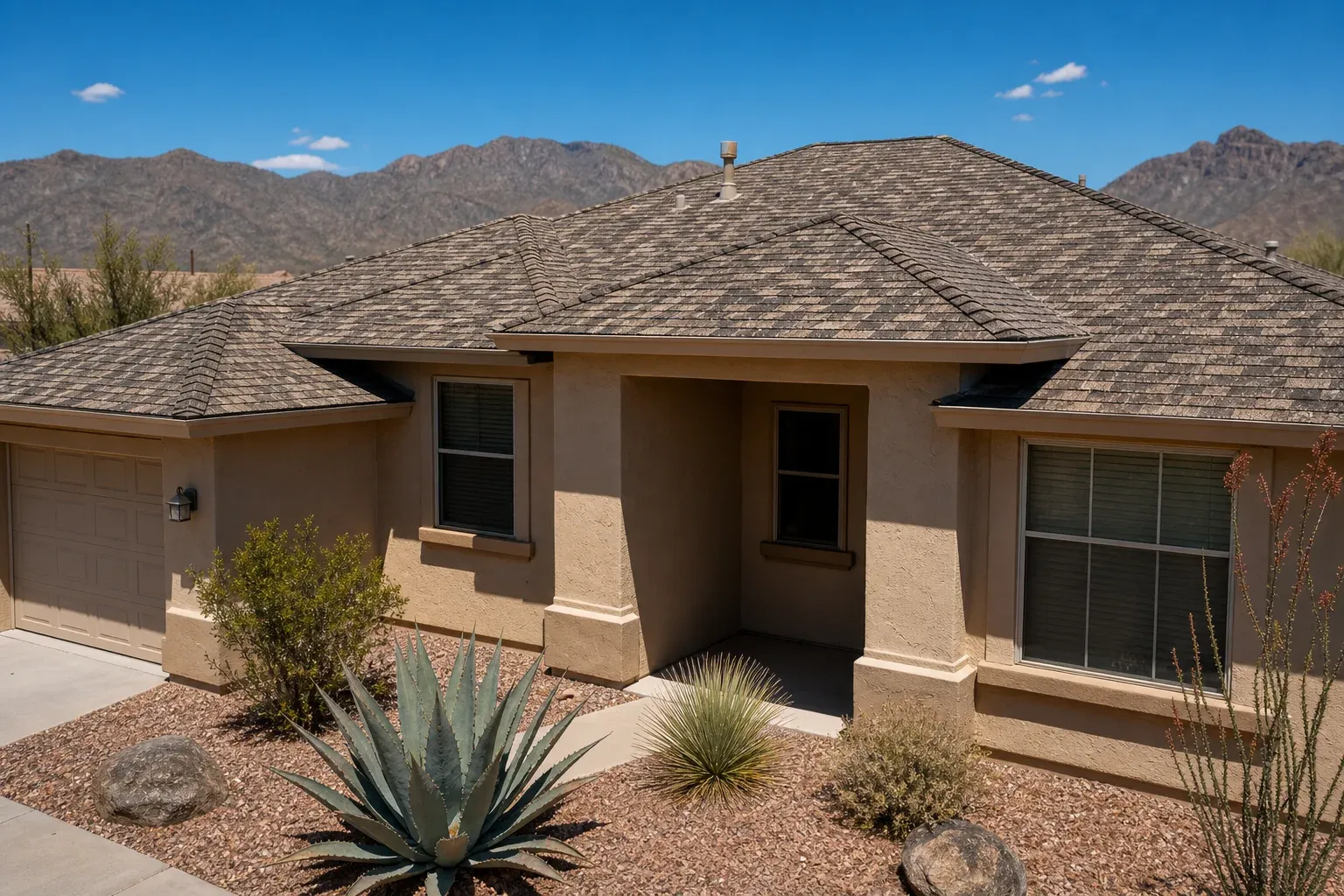
How Long Should Your Roof Actually Last Out Here?
Published May 10, 2026
Your roof’s expected lifespan depends on two things: what it’s made of, and what it has to deal with. In Las Cruces and southern New Mexico, the climate is harder on roofing materials than many other parts of the country — high UV, intense heat, monsoon storms, and temperature swings that stress any material that expands and contracts. Here’s what realistic roof life actually looks like here.
Realistic roof lifespans in Las Cruces
| Material | Manufacturer’s rated lifespan | Realistic lifespan in Las Cruces |
|---|---|---|
| 3-tab asphalt shingles | 20–25 years | 12–17 years |
| Architectural shingles | 25–30 years | 15–20 years |
| Premium/designer shingles | 30–50 years | 20–30 years |
| Standing seam metal | 40–70 years | 40–70 years |
| Corrugated/exposed-fastener metal | 30–40 years | 25–35 years |
| Clay tile | 50+ years | 50+ years |
| Concrete tile | 40–50 years | 35–45 years |
| TPO flat membrane | 20–30 years | 15–22 years |
| EPDM flat membrane | 20–30 years | 15–22 years |
| Modified bitumen | 15–20 years | 12–17 years |
The gap between rated and realistic lifespans for asphalt products is real and consistent. Metal and tile, by contrast, hold up in desert climates about as well as their ratings suggest.
What the desert climate does to different roof types
UV radiation
Southern New Mexico sits at elevation and receives intense solar radiation year-round. The UV index in Las Cruces is regularly in the “very high” to “extreme” range — higher than Phoenix, higher than Houston, higher than almost anywhere in Florida. UV breaks down the asphalt binder in shingles, causing granule loss and brittleness well before the rated lifespan. This effect is cumulative and accelerating — a shingle that looks okay at year 12 may be deteriorating noticeably by year 15.
Metal and tile are not meaningfully affected by UV in the same way.
Heat cycling
Las Cruces summer days regularly exceed 100°F. Cool mornings and hot afternoons create daily temperature swings of 30–40°F, causing roofing materials to expand and contract every single day. Over thousands of cycles, this mechanical stress works on adhesive strips, seams, and the material itself. Good installation — proper fastening, correct exposure, and adequate expansion gaps on metal — reduces this effect but doesn’t eliminate it.
Monsoon weather
July through September brings the annual monsoon, which delivers most of Las Cruces’ annual rainfall in a short burst. Hail is a regular feature of monsoon thunderstorms and is the most common cause of sudden roof damage in the area. See our monsoon season roof damage guide for how to assess storm damage.
Attic ventilation
This is the one factor entirely within your control, and it matters more in a hot climate than most homeowners realize. A poorly ventilated attic in Las Cruces can reach 150–170°F in summer, baking the underside of your shingles and shortening their life significantly. Ridge-and-soffit ventilation systems that allow air to flow through the attic from the lowest point to the peak are the most effective approach. If your home lacks adequate attic ventilation, correcting it is one of the most cost-effective things you can do to extend your next roof’s life.
Signs your roof is approaching end of life
You don’t need to climb on the roof to recognize these from the ground or inside:
- Granules in the gutters — small amounts are normal; significant accumulation after every rain means shingles are shedding their protective layer
- Cupping or curling shingles — edges turning up or shingles cupping in the center indicate advanced wear and heat damage
- Cracking or brittleness — visible from the ground on a steep roof, or noticeable when you look along the surface at a low angle
- Multiple separate leak points — one leak can be repaired; leaks appearing in different areas over time indicate the whole surface is failing
- Daylight in the attic — any visible light coming through the decking is a clear sign of serious wear or damage
- Age — if you don’t know how old your roof is, that’s worth finding out. A 20-year-old asphalt shingle roof in Las Cruces is in its final chapter regardless of how it looks on a sunny day
When to get an estimate
The right time to have a roofer take a look is before you have a problem, not after. A free estimate visit tells you honestly where your roof stands — whether it has five years left, whether there’s a specific concern to address, or whether it’s time to start planning a replacement.
Call (575) 222-7950 for a free, no-pressure assessment of your roof’s condition and remaining life.